
Aquatic Biofiltration Systems
Trickling Biofilters for Aquatic Research Systems
Aquabiotech uses trickling biofilters with counter-current aeration to support reliable nitrification, oxygen transfer, gas exchange, and stable water quality in aquatic research and recirculating systems.
Our Approach to Aquatic Biofiltration
A biofilter is the biological engine of an aquatic life-support system. The equipment provides the surface area, water distribution, oxygen availability, and operating conditions required by the microorganisms that convert ammonia into nitrite and then nitrate.
Aquabiotech specializes in trickling biofilters designed to operate as part of a complete aquatic system. This approach combines biological filtration with active gas exchange, helping support the animals, the nitrifying microorganisms, and the overall stability of the system.
Biofiltration should not be selected or evaluated as an isolated component. The biofilter must work with solids removal, circulation, aeration, degassing, temperature control, monitoring, water renewal, and the expected biological load.
What Makes a Biofilter Effective?
A biofilter must provide suitable conditions for nitrifying microorganisms while remaining practical to operate and maintain. Media volume alone does not determine performance.
Effective Biological Surface Area
Nitrifying microorganisms grow on surfaces. Biofilter media provide colonization area while allowing water, dissolved waste, and oxygen to reach the biological film.
Reliable Water Distribution
Water must be distributed across the media so that the available surface area is effectively used. Poor distribution can create underused areas and reduce the practical treatment capacity of the biofilter.
Strong Oxygen Availability
Nitrification consumes oxygen. A biofilter must maintain suitable oxygen conditions for the microorganisms responsible for ammonia and nitrite conversion.
Appropriate Solids Management
A biofilter is intended primarily for dissolved-waste conversion, not for capturing suspended solids. Mechanical filtration before the biofilter helps prevent media obstruction, uneven flow, oxygen limitations, and unnecessary maintenance.
Stable Water Chemistry
Temperature, alkalinity, and pH influence nitrification. Effective biofiltration therefore depends on monitoring and maintaining the surrounding water-quality conditions, not simply installing biological media.
Why Aquabiotech Uses Trickling Biofilters
In a trickling biofilter, water is distributed over media and flows downward as a thin film. The media remain exposed to air, providing the biological surface with direct access to oxygen while water and dissolved nitrogenous waste pass through the filter.
Aquabiotech uses this configuration because it combines biological treatment and gas exchange within a straightforward and dependable process. The open-air arrangement supports nitrification while reducing the risk that microbial activity will become limited by poor oxygen availability.
Trickling biofilters are particularly relevant to aquatic research facilities, hatcheries, fish-holding systems, and recirculating aquaculture systems where stable performance, clear operating principles, and predictable maintenance are important.
Counter-Current Aeration
In Aquabiotech’s trickling biofilter approach, water moves downward through the media while air moves upward. These opposing flows create counter-current contact between the water and the air.
As water descends through the biofilter, the arrangement supports oxygen transfer to the water and biological film. It can also promote the release of carbon dioxide and other dissolved gases from the water.
Water flows downward. Air moves upward. The biofilter supports biological treatment and gas exchange at the same time.
The oxygen demand of an aquatic system includes both animal respiration and microbial activity. A biofilter design that promotes gas exchange helps support the complete life-support process rather than treating nitrification as an isolated reaction.
More Than Ammonia Control
The principal biological function of the biofilter is nitrification, but the practical value of a trickling configuration extends beyond ammonia and nitrite conversion.
- Supports oxygen availability for nitrifying microorganisms
- Promotes gas exchange as water passes through the media
- Contributes to carbon-dioxide management
- Provides visible and accessible water distribution
- Integrates readily with mechanical filtration and circulation equipment
- Supports stable operation in freshwater and marine applications
A trickling biofilter does not replace the other components of an aquatic life-support system. Its value comes from how effectively it works with those components.
Biofilters for Aquatic Research Facilities
Research systems often require more than general animal-holding capability. Water-treatment equipment must support repeatable conditions, controlled experimental environments, reliable operation, and practical access for monitoring and maintenance.
Biofilter selection can influence system footprint, mechanical-room arrangement, drainage, ventilation, equipment access, commissioning schedules, and future expansion. These considerations are particularly important when aquatic infrastructure must be coordinated with architectural, mechanical, electrical, and laboratory requirements.
Aquabiotech evaluates biofiltration as part of the complete research system, including expected species, biomass, feed input, operating temperature, water type, water-reuse objectives, available space, and projected facility operation.
Biofilter Startup and Inoculation
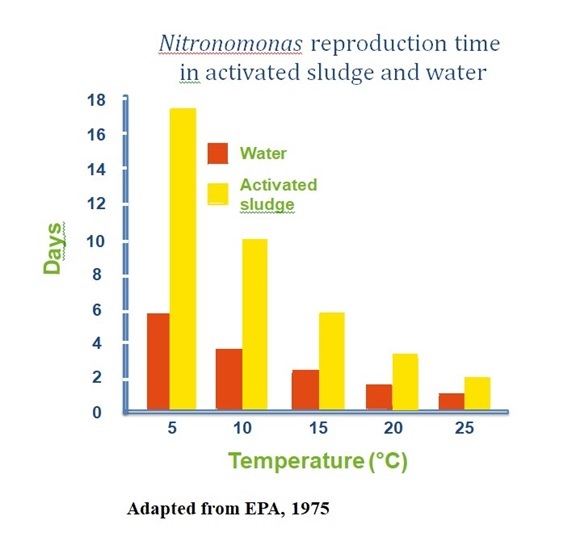
A new biofilter does not immediately provide its full biological treatment capacity. Nitrifying microorganisms must colonize the media and develop sufficient capacity for the expected ammonia load.
Aquabiotech pre-activates biofilters for its aquatic systems before delivery. Facilities that require an on-site source of active nitrifying media can also consider the Biofilter Inoculation Station.
Inoculation provides an established biological starting point, but it does not eliminate the need for controlled loading, adequate oxygen, stable alkalinity and pH, and routine water-quality monitoring.
For a more detailed explanation of ammonia conversion, startup, alkalinity consumption, and biological filtration, see Nitrification and Biofiltration in Aquatic Systems.
When Biofilter Performance Declines
When ammonia or nitrite begins to rise, the filter media are not necessarily the underlying problem. Performance can be affected by changes elsewhere in the system.
- Increased feeding or biomass
- Insufficient dissolved oxygen
- Uneven water distribution
- Solids accumulation
- Declining alkalinity and pH
- Rapid temperature changes
- Interrupted circulation
- Chemical exposure affecting microbial activity
- Incomplete startup or commissioning
Troubleshooting should consider recent operating changes and the complete treatment process before concluding that the biofilter itself has failed.
Biofiltration as Part of a Complete Life-Support System
Reliable aquatic-system performance depends on coordination between biological and mechanical processes.
- Mechanical filtration removes suspended solids before they interfere with biological media
- Pumps and circulation equipment deliver water consistently
- Aeration and oxygenation support aquatic organisms and nitrifying microorganisms
- Degassing manages carbon dioxide and other dissolved gases
- Temperature control maintains suitable operating conditions
- Monitoring identifies changing conditions before they become critical
- Water renewal or advanced treatment manages nitrate and other long-term accumulations
The biofilter, animal habitat, water-treatment equipment, controls, building services, and operating procedures must function as one coordinated system.
Frequently Asked Questions
Why does Aquabiotech use trickling biofilters?
Trickling biofilters provide biological surface area while exposing the water and biofilm to air. Aquabiotech’s counter-current approach supports nitrification, oxygen transfer, and gas exchange within an integrated aquatic life-support system.
What is counter-current aeration?
Counter-current aeration occurs when water flows downward through the biofilter while air moves upward. The opposing flows promote contact between air and water as biological treatment takes place.
Does a trickling biofilter remove nitrate?
A conventional nitrifying trickling biofilter converts ammonia into nitrite and then nitrate. It does not remove nitrogen from the system. Nitrate may require management through water renewal, denitrification, biological uptake, or another application-specific strategy.
Can a trickling biofilter provide gas exchange?
Yes. Exposing water to air as it passes over the media can support oxygen transfer and the release of carbon dioxide and other dissolved gases. Actual performance depends on the complete biofilter and system design.
Does a new biofilter work immediately?
No. Nitrifying microorganisms need time to colonize the media and develop sufficient capacity for the expected ammonia load. Inoculation and controlled commissioning can significantly improve startup predictability and reduce the uncertainty associated with biofilter maturation. This is one of the reasons Aquabiotech developed the Biofilter Inoculation Station, which provides facilities with a dedicated source of active nitrifying media for biofilter startup and expansion projects.
Planning Biofiltration for an Aquatic Facility
Biofilter selection should begin with the animals, research objectives, biological loading, water type, operating temperature, facility arrangement, and expected operating practices. The correct solution is not simply the filter with the largest media volume or smallest footprint.
/about-us/Since 1989, Aquabiotech has helped universities, government laboratories, research institutions, aquaculture facilities, public aquariums, and private organizations develop aquatic systems tailored to their scientific and operational requirements.